Science & Nature
Chicago’s Chipmunks Are Evolving in Front of Our Eyes, and That’s Not a Good Thing, Researchers Say
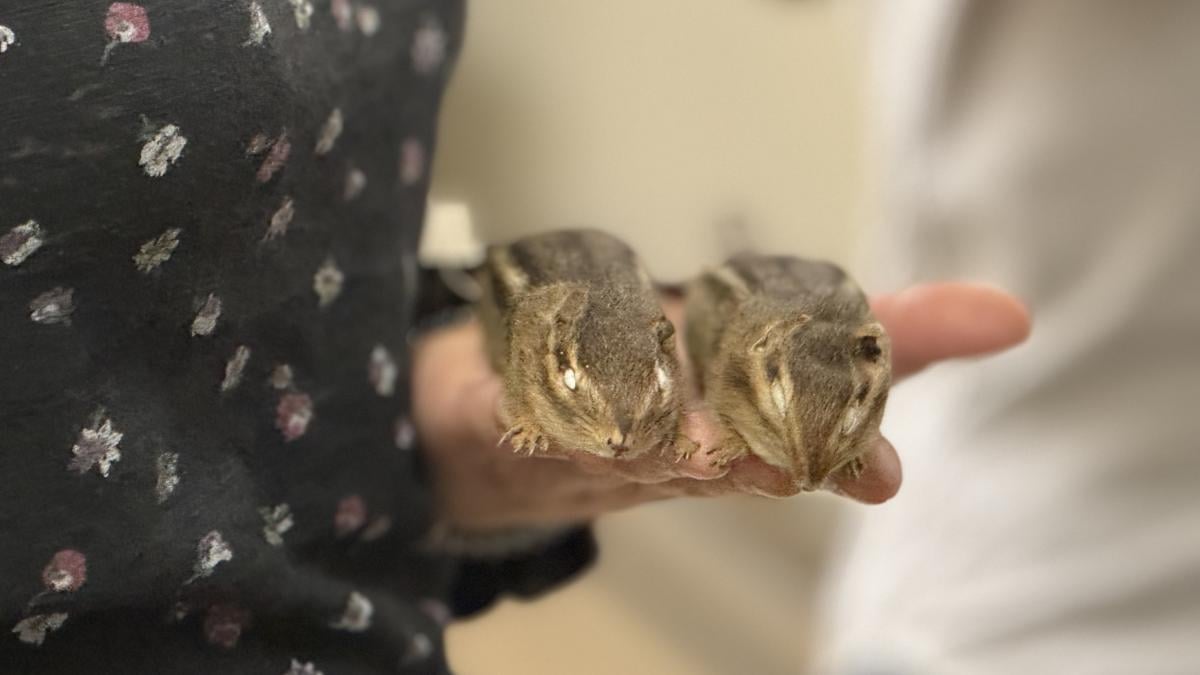 Chipmunk specimens in the Field Museum’s collection were used to assess how mammals are adapting to urbanization. (Patty Wetli / WTTW News)
Over the past 125 years, the bodies of chipmunks in Chicago have gotten bigger, but their rows of teeth have gotten smaller.
Two research scientists at the Field Museum think they know why.
It’s us.
The little rodents are eating people food — either because we’re feeding them or they’re scavenging our leftovers.
“We hypothesize they are eating more soft food, and that is requiring less bite force,” said Anderson Feijó, assistant curator of mammals at the Field, “and that is reflected in the tooth row length and robustness.”
In other words, they’re evolving to chew our mush instead of cracking nuts.
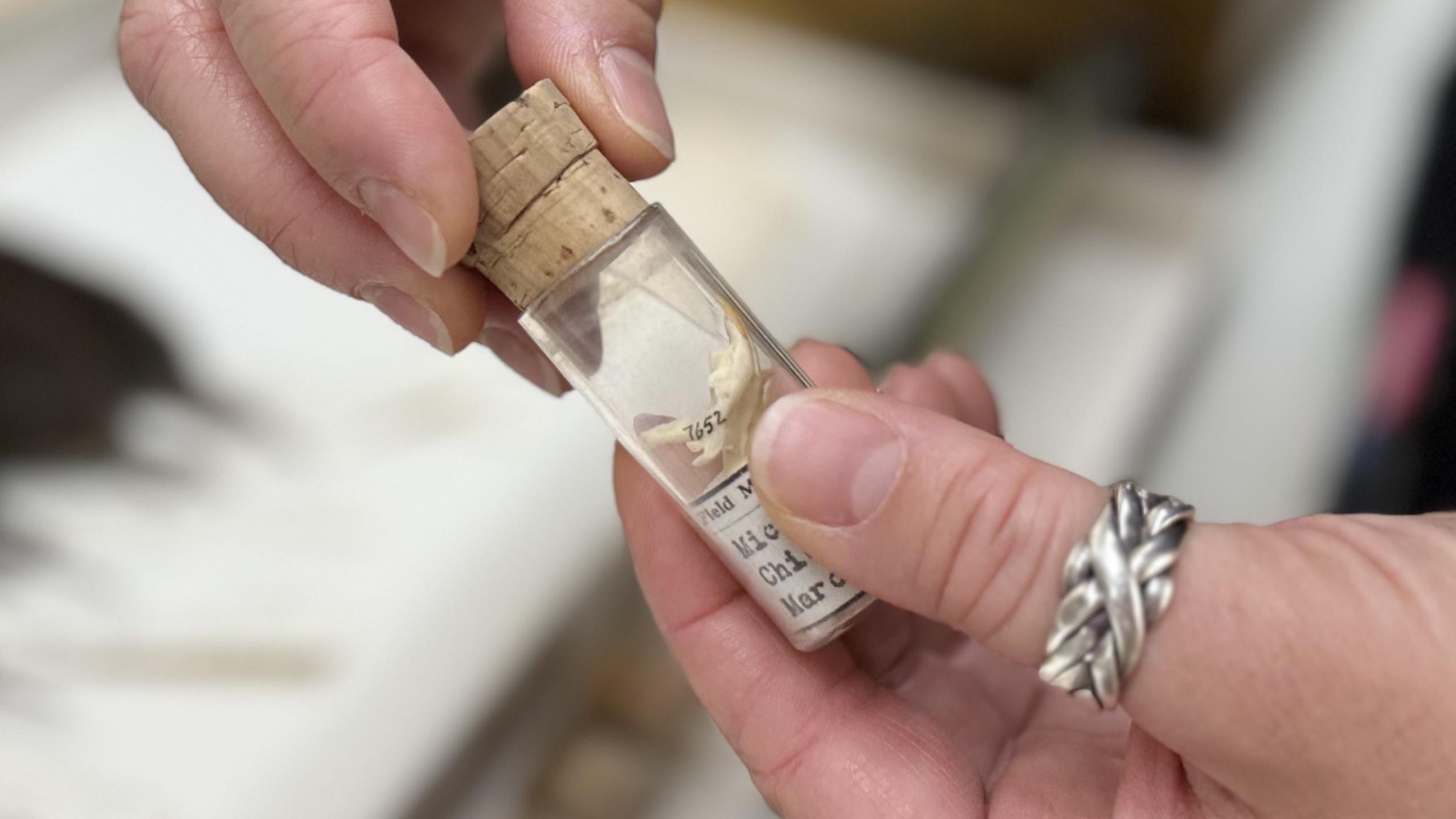 Tiny skull specimens, collected a hundred years apart, helped Field Museum discover ways chipmunks and voles have evolved as Chicago has become more urbanized. (Patty Wetli / WTTW News)
Feijó and his colleague Stephanie Smith are co-authors of a newly published study in the journal Integrative and Comparative Biology, where they shared their findings on the ways wildlife — specifically chipmunks and voles — have adapted to increased urbanization in Chicago.
Drawing on the Field’s vast mammal collection, Feijó and Smith were able to analyze hundreds of specimens of chipmunks and voles gathered in Chicago as far back as the late 1890s up to present day. They paid particular attention to the animals’ skulls, taking meticulous measurements and creating 3D scans.
“We chose the skull because the skull is where you live. … We can look at things like diets, hearing, we can look at things about muscle attachment. There’s all sorts of stuff you can explore in the skull,” Smith said. “We were able to quantify a lot of the different aspects of the skull throughout time.”
In addition to the changes noted in chipmunks, the researchers found that voles’ auditory bullae had gotten smaller — this is the hollow, bony structure that houses inner ear bones.
“One of the hypotheses that we are hoping to test in the future … is it could be because the smaller auditory bullae allows these animals to filter out the excess noise of the city. So things like people tromping around on the top of your house when you’re a vole and you live underground,” Smith said.
The researchers were able to connect these changes to urbanization in Chicago, Feijó said, by using satellite data and historic information that allowed them to reconstruct the city’s growth.
In this way, they could compare a chipmunk skull collected from Jackson Park in 1905 with one from the same location in 2012, and then layer on the level of urbanization. The changes that they recorded corresponded with increased development.
“It’s indicative that we are having an effect,” Smith said, “and that’s not ideal.”
Though the study suggests that these two common rodents are evolving in response to the presence of humans, their ability to adapt shouldn’t be misread as a positive sign that wildlife will be able to cope with whatever people throw at them, Smith said.
“Just because they’re changing doesn’t mean it’s a sustainable change,” Smith said. “The change may be allowing them to deal with the situation for a time, but it doesn’t necessarily mean it is going to let them deal with it forever.”
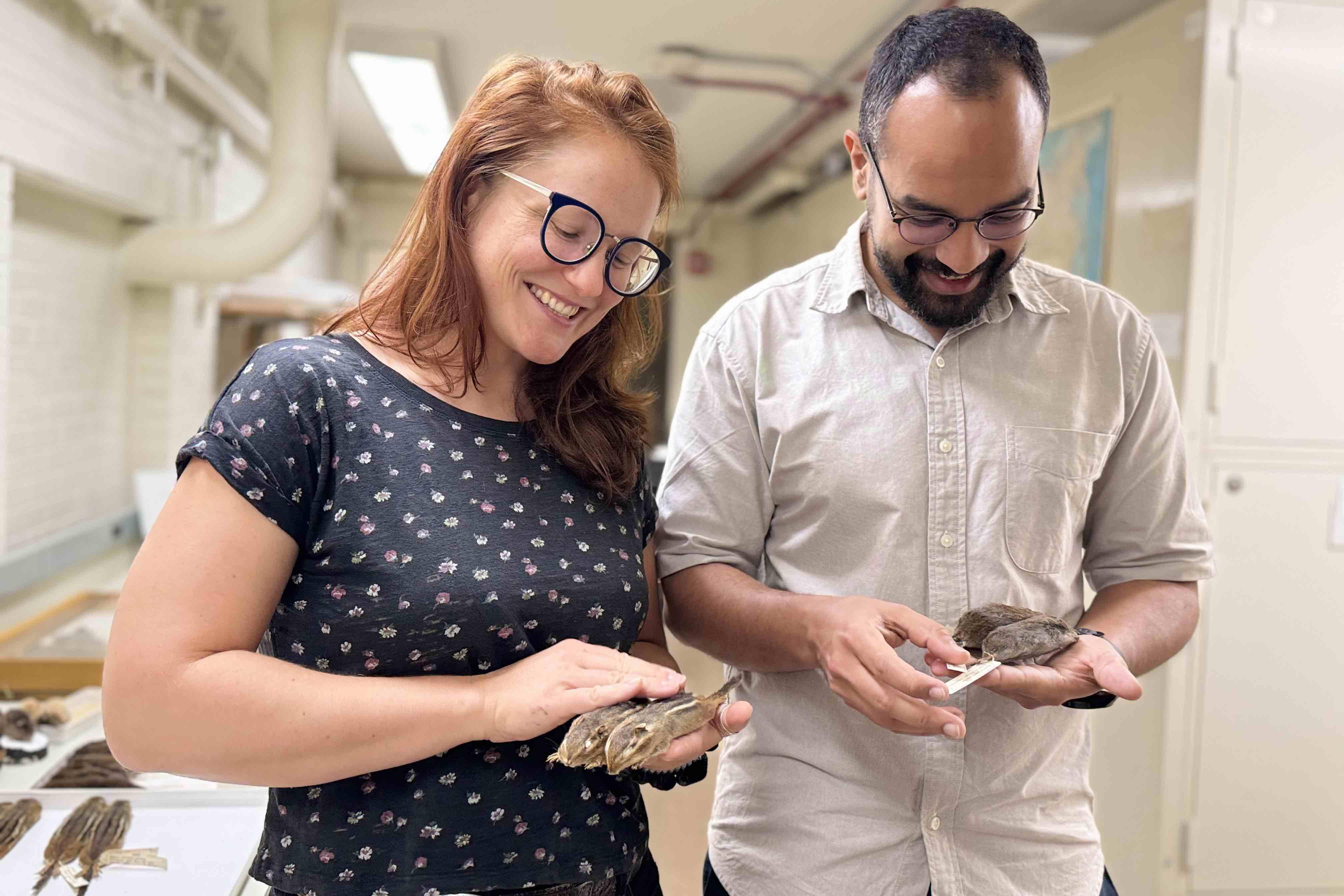 Field Museum scientists Stephanie Smith (l) and Anderson Feijó with specimens of chipmunks and voles. (Patty Wetli / WTTW News)
While they plan to conduct follow-up studies to further investigate their theories, the Field researchers said there are a number of key takeaways to be drawn from their initial findings.
One is that chipmunks and voles demonstrated different adaptations to urbanization based on their different ecologies.
“Because these two animals are small mammals, people might sort of put them in the same category in their heads. But they’re responding to this human alteration of the landscape in different ways," Smith said. “So preservation of natural populations of animals is not a one-size-fits-all thing. We need to keep that in mind.”
Another is that people should absolutely refrain from feeding wildlife, whether it’s chipmunks, ducks, geese, squirrels, etc., Feijó said.
People might think they’re doing the animal a favor, “but actually you are reducing the fitness of the animal to survive in the wild environment,” he said. “We think because (chipmunks) are having the smaller tooth row, although they are getting bigger, they are becoming less fit to consume hard nuts and hard seeds as their natural food that they have in the wild.”
Perhaps most importantly, Smith said, she would like people to give greater consideration to the fact humans are sharing space with the insects, birds, mammals, microscopic organisms and other life forms that exist all around Chicago.
“These guys can’t speak for themselves and we’re in their house every day, and they can’t do anything about it,” Smith said. “Even if you don’t see them, you should think about how your actions and your presence and your attitude … affects these animals, too.”
Contact Patty Wetli: @pattywetli | (773) 509-5623 | [email protected]